
Cocobi Body Parts - kids
KIGLEEducational
0.00.00 Reviews
- Version
- 1.0.0
- Installs
- 10.00K
- Age Rating
- Everyone
Screenshots
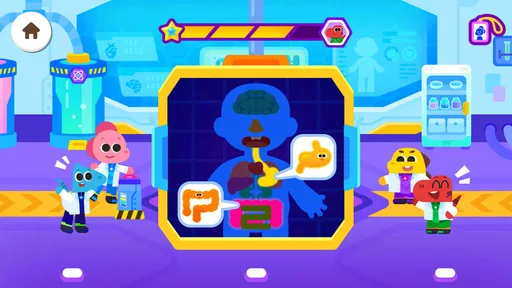
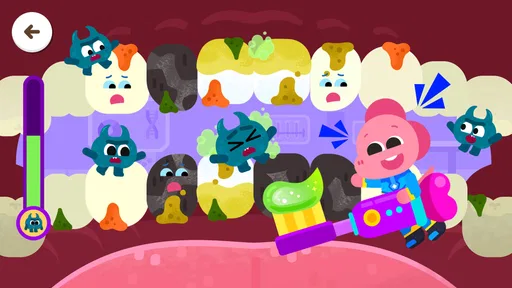
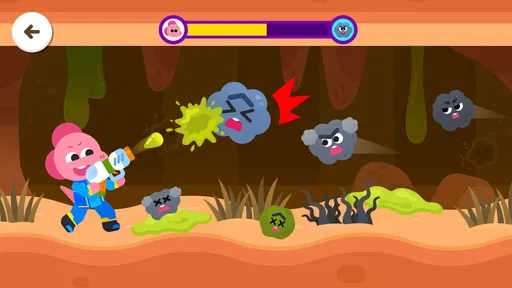
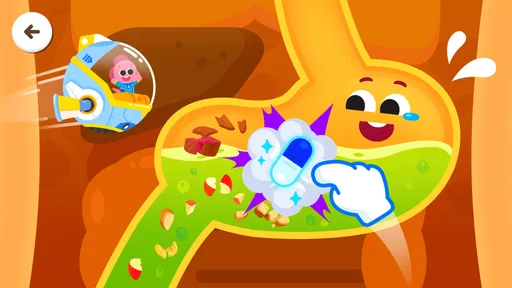
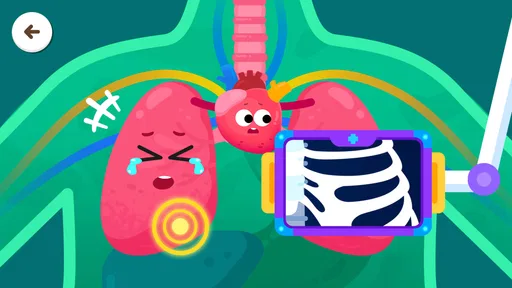
Our Review of Cocobi Body Parts - kids
 Analysis by Appyee
Learning body parts can feel abstract to a young child, especially when it is presented as a list of unfamiliar words. Cocobi Body Parts takes a more inviting route: it turns the subject into a playful activity built around cute dinosaur characters. After spending time with it, my overall impression is that it works best as a short, friendly learning game rather than a complete early-learning curriculum. It is easy to approach, visually appealing, and suitable for children who learn better through tapping and repetition than through worksheets.
The game is free to start, which makes it simple for a parent to test during a quiet moment without committing to a purchase first. It is made by KIGLE, a developer associated here with a child-focused educational game, and the app is listed for Everyone. That combination gives it a clear place in a family library: a gentle introduction to body-related vocabulary for young children, with dinosaurs providing the emotional hook.
How the dinosaur theme supports learning
The strongest idea in Cocobi Body Parts is not complexity; it is approachability. A child who might ignore a plain lesson about anatomy may be more willing to explore when the lesson is attached to friendly animated characters. The dinosaur theme gives the activity a recognizable identity without making the subject feel serious or intimidating.
In my view, this matters most for first exposure. A preschooler does not necessarily need a long explanation of why learning body parts is useful. They need a reason to stay engaged long enough to hear, see, and repeat the words. The playful setting creates that opening. Parents can then connect the game to everyday moments, such as naming a hand while washing it or pointing out a foot when putting on a shoe.
The educational value is therefore strongest when the app is used alongside conversation. I would not hand it over as a replacement for speaking with a child. Instead, I would use a short session as a prompt: after the game identifies a body part, ask the child to find the same part on themselves, on a toy, or on a family member. That simple follow-up turns screen interaction into a real-world memory exercise.
This is also where the game can be more useful than a static picture book for some children. A book encourages looking and listening, while an interactive game invites a response. That response can reveal whether the child is recognizing the word or merely watching the animation. If the child taps confidently but cannot point to the same body part away from the screen, I would treat that as a sign to slow down and practice offline rather than simply moving ahead.
A good fit for brief, repeatable sessions
I found the concept better suited to several small sessions than one long sitting. Young children often absorb a new word through repeated exposure, but they can lose interest when an activity stretches beyond their attention span. A parent might introduce one session before breakfast, revisit it after a bath, and then ask the child to name a body part during dressing. The game becomes one step in a routine instead of the entire lesson.
That approach also helps with screen-time boundaries. Because this is a focused educational game rather than a broad entertainment world, it is easier to define a purpose for opening it: practise body vocabulary, complete a short activity, then put the device away. I prefer that kind of clear beginning and ending for younger users.
Another useful tactic is to let the child answer before offering help. When a prompt appears, wait a moment and see whether the child can identify the target independently. If they choose incorrectly, avoid turning the moment into a test. Say the word naturally, point to the matching body part, and let them try again. The game provides the visual context, while the adult supplies patience and explanation.
This makes the experience particularly suitable for children who are beginning to connect spoken words with their own bodies. It may also help families introducing English vocabulary at home, although the benefit will depend on the language available in the child’s version and the adult’s ability to reinforce the terms. I would use the app as a conversation starter, not as the sole language model.
What makes it more useful than a quick novelty
The dinosaur presentation is an obvious attraction, but the more meaningful strength is the way it lowers the barrier to participation. A child does not need to understand a complicated interface or follow a long story before reaching the learning point. That directness is valuable for early users who become frustrated by menus, rules, or multi-step missions.
It also gives parents a practical way to observe learning. Watch whether the child waits for the instruction, looks at the relevant visual cue, and then connects the word with the correct action. Those observations are more informative than simply asking whether the child “likes” the game. If the child repeatedly guesses, the next session should be slower and more verbal. If the child answers easily, move the learning into daily routines rather than assuming that more screen time is needed.
One of my preferred uses would be with a child who is already interested in dinosaurs but has little patience for formal learning materials. The theme can act as a bridge. Start with the game, then continue with a toy dinosaur: ask where its head, legs, or eyes would be. The toy does not need to be part of the app; the point is to transfer the vocabulary to a different object and prevent recognition from becoming tied only to one screen.
For a sibling setting, I would avoid turning the activity into a competition. Older children may answer quickly, while younger ones need more time. Taking turns naming or pointing can keep everyone involved without making mistakes feel embarrassing. The game is at its best as a cooperative prompt, especially when an adult calmly repeats the vocabulary.
The limits parents should understand
The same simplicity that makes the game approachable may limit its long-term depth. A child who has already mastered basic body-part vocabulary may not find enough challenge to stay interested for very long. I would not choose it as the main educational app for an older child seeking detailed anatomy, reading practice, science explanations, or a broad progression of lessons.
It is also not the right choice for every learning style. Some children prefer physical activities, songs, drawing, or hands-on toys. If a child becomes passive in front of the screen, tapping through the game may create the appearance of learning without much recall afterward. In that situation, a picture book, an action song, or a parent-led game of “Simon Says” could be more effective. The app should support active learning, not replace it.
Parents should also think about the role of in-app purchases. The app itself is free, while optional purchases are listed at $1.39 per item. That is not automatically a problem, but I would check the device’s purchase controls before giving a child unsupervised access. A child-focused interface can make tapping feel like part of the game, so adults should decide in advance whether any optional content is appropriate.
Another practical consideration is device readiness. The current version is 1.0.0 and the game requires Android 7.0 or later. That is helpful for many existing devices, but a very old phone or tablet may not meet the requirement. I would check compatibility before planning the game for a trip or a classroom-style activity. A parent who relies on an older spare device should confirm that it can run the app smoothly rather than discovering the issue when the child is ready to play.
The release date is Aug 3, 2026, and the app has reached over ten thousand installs. I would read that as a sign that it is an emerging option rather than an established household standard. That does not determine quality, but it does make expectations important: I would approach it as a focused, newly available learning game, not as a large platform with a deep library of proven lessons.
Where it sits among familiar alternatives
Compared with a traditional body-parts worksheet, this game is more inviting for a child who needs movement and visual feedback. Compared with a general preschool video, it offers a more active role because the child has to respond rather than simply watch. Compared with a full educational suite, however, it is narrower. A larger learning platform may offer alphabet work, numbers, matching, puzzles, and progress across several subjects, while this game concentrates on one theme.
That narrow focus can actually be an advantage when the goal is clear. If a parent wants a small activity for introducing body vocabulary, a broad app may feel distracting. A child can move from one unrelated mini-game to another without retaining the original lesson. Here, the subject remains recognizable, which makes it easier to build a short routine around it.
On the other hand, families looking for detailed tracking, structured levels, or a complete preschool program should compare it with a more comprehensive alternative. I would also choose a non-screen option when the child needs pronunciation practice, physical coordination, or personal interaction. No dinosaur animation can tell a parent as much as a real conversation can about what a child understands.
Who I would recommend it to
I would recommend the game to parents of young children who are starting to learn basic body-part words and who respond positively to colorful characters. It is especially appealing when the child already likes dinosaurs, needs a gentle introduction to educational apps, or benefits from repeating a small topic in short bursts.
It can also work well as a shared activity between an adult and child. Sit nearby for the first session, listen to the wording, and notice which parts hold the child’s attention. Then extend the lesson away from the device by asking the child to point, move, or name the same parts during ordinary routines. This is the best way to get more value than the game alone can provide.
I would be more cautious about recommending it to children who are ready for reading-heavy material, advanced science content, or a wide range of subjects. It is also a weaker choice for families who want a completely hands-off learning experience. The app may start the activity, but the adult’s questions and real-life examples are what make the vocabulary stick.
For families concerned about cost, the free entry point makes trying it straightforward, while the optional $1.39 purchases per item deserve a quick settings check. I would not buy anything immediately. First, see whether the child returns to the activity willingly, remembers the words later, and benefits from the way the lessons are presented. If the core experience is not engaging, extra content is unlikely to solve that problem.
My final view after using it
Cocobi Body Parts succeeds because it understands that an early learning game must first earn a child’s attention. The dinosaurs make a basic topic feel friendly, and the focused subject gives parents an easy starting point for conversations about the body. I especially like its potential as a short routine: play briefly, repeat the words aloud, and then connect them to dressing, bathing, movement, or a toy.
Its weaknesses are equally clear. It should not be mistaken for a full preschool curriculum, a detailed anatomy tool, or a substitute for adult interaction. Children who have already mastered the topic may outgrow the challenge, and those who learn best through physical play may gain more from an offline activity. The optional purchases also mean that adults should manage access rather than leaving every decision to a young player.
Overall, I see it as a useful first step for families wanting a simple educational game with a warm, child-friendly theme. KIGLE keeps the idea focused, and that focus is valuable when a child needs one approachable concept instead of a crowded menu of lessons. If your child enjoys dinosaurs and is beginning to learn body vocabulary, I think this free game is worth trying together. Use it as a launchpad for real conversation, not as the whole lesson, and its modest scope becomes a strength rather than a drawback.
Verdict
Strengths of Cocobi Body Parts - kids
- Colorful, friendly visuals make body-part learning appealing to young children.
- Simple touch controls are easy for preschoolers to understand independently.
- Short activities suit brief attention spans and quick learning sessions.
- Encourages vocabulary building through repeated exposure to body-part names.
- Child-friendly design avoids complex menus and distracting competitive elements.
Limitations of Cocobi Body Parts - kids
- Some activities may feel repetitive after several play sessions.
- Learning content is limited mainly to basic body-part recognition.
- Younger children may need help understanding certain instructions.
- Ads or paid elements may affect the experience, depending on the version.
- The app offers limited challenge for children who already know the basics.
Other Releases by KIGLE
View All
Cocobi Little Police - Kids
Educational3.8

Cocobi Life World - city, town
Educational3.9

Cocobi Baby Care - Babysitter
Educational3.8

Cocobi Hospital - Kids Doctor
Educational3.8
Similar Picks in This Category
View All
Little Panda Policeman
BabyBus4.0

Monster Trucks Game for Kids 2
Raz Games4.1

Little Panda's Chinese Recipes
BabyBus4.4

Little Panda's Restaurant
BabyBus4.4

Little Panda's Ice Cream Games
BabyBus4.3

Baby Panda Care
BabyBus3.8
Frequently Asked Questions
What is Cocobi Body Parts - Kids, and what can children learn from it?
Cocobi Body Parts - Kids is an educational game designed to help young children become familiar with the human body. Through simple activities, colorful illustrations, and interactive touch-based play, children can learn the names and basic functions of body parts. The game presents learning in a playful format, making it suitable for preschoolers who are beginning to build vocabulary and understand how their bodies work.
Is Cocobi Body Parts - Kids suitable for preschool children?
The game is mainly aimed at preschool and early-learning children, especially those who enjoy short, simple activities with visual guidance. Its controls are generally easy to understand, so children can explore many sections with limited assistance. However, younger children may still need a parent nearby to explain unfamiliar words, read instructions, or help them move between activities until they become comfortable with the game.
Does the game require an internet connection to play?
Cocobi Body Parts - Kids is intended to be a convenient learning game for children, and much of the core content can typically be accessed after installation without staying connected to the internet. Offline availability may depend on the device, version, and whether additional content or advertisements need to load. Parents should open the game once while online and check the available activities before handing over the device.
Are there advertisements or in-app purchases in Cocobi Body Parts - Kids?
Parents should review the current store listing and the game’s settings because advertising and purchase options can vary between versions, regions, and devices. Some free children’s apps include advertisements or offer extra content through optional purchases. It is a good idea to enable parental controls, restrict unauthorized payments, and check whether an ad-free or premium option is available before allowing a child to play independently.
Is Cocobi Body Parts - Kids safe and useful for independent play?
The game offers a child-friendly way to introduce basic body-part vocabulary, but parents should still supervise the first sessions. Check the permissions requested, advertising behavior, external links, and any purchase prompts before regular use. The activities are simple enough for many children to explore independently, although adult participation can make the experience more educational by encouraging children to repeat words and connect the lessons with their own bodies.
Play our best games!


